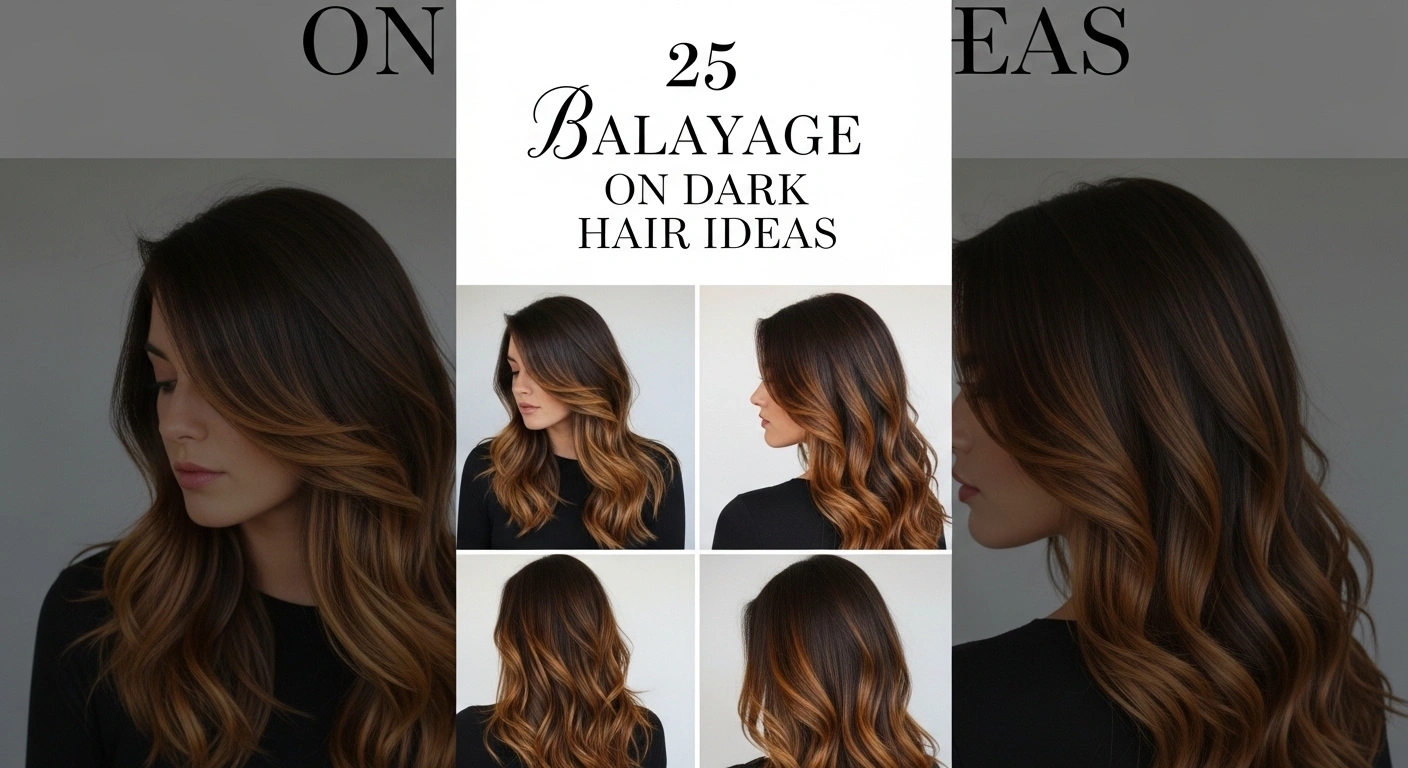
25 Balayage on Dark Hair Ideas You Need to Save Right Now

There is a very specific kind of disappointment that comes with getting balayage on dark hair and walking out of the salon with something that looks nothing like the inspiration photo you brought in. Either it is barely visible — just a slight warmth that disappears completely indoors — or it went too light too fast and now there are patchy, orange-toned sections that look more like sun damage than a deliberate color technique. Either way, you spent real money and you did not get what you came for.
Balayage on dark hair is genuinely one of the most beautiful color techniques in existence when it is done correctly. The way warm, dimensional tones move through a deep brown or black base creates a depth and richness that no other coloring method can replicate. It looks natural in a way that foils and full highlights never quite do, it grows out gracefully instead of showing a harsh line of demarcation, and it requires far less maintenance than lighter, all-over color. But it does require a colorist who understands dark hair specifically — because balayage on dark hair behaves completely differently than balayage on already-lightened or naturally lighter hair.
This article covers 25 balayage on dark hair ideas for every preference, every skin tone, and every level of color commitment — along with the honest information you need to make sure you actually get the result you want.
1. Caramel Balayage on Dark Brown Hair

The most classic and universally flattering version of balayage on dark hair. Warm caramel tones hand-painted through a deep brown base create a sun-kissed effect that looks like your hair has spent a perfect summer outdoors. The caramel picks up the natural warmth already present in dark brown hair and amplifies it, creating a color that looks completely organic rather than applied. This is the balayage on dark hair idea that works on every skin tone — from very fair to very deep — because caramel sits in a warmth range that flatters virtually everyone.
Read More: 20 Hairstyles for Square Faces That Soften Your Features
2. Honey Balayage on Black Hair

Taking balayage on dark hair to its most dramatic starting point — true black — and adding honey-toned highlights through the mid-lengths and ends creates a stunning contrast that is rich and dimensional without ever looking harsh. The key with honey balayage on black hair is the placement. Because the contrast between black and honey is significant, the placement needs to be soft and blended at the root rather than painted right up to the scalp. A shadow root left at the natural black keeps the transition seamless and prevents any harsh lines of demarcation.
3. Toffee Balayage on Dark Hair

Toffee balayage — slightly deeper and more amber than caramel — is one of the most requested balayage shades for dark hair in 2026 and the demand is completely justified. The toffee tone has a warmth and richness that feels more intentional than a classic caramel, and on dark hair it creates a color melt effect that photographs with incredible depth. Ask your colorist for a toffee balayage with a seamless root shadow and soft, blended ends rather than anything sharp or contrasted — the blend is what makes toffee balayage on dark hair look expensive.
4. Chestnut Balayage on Dark Brown Base

Chestnut balayage uses a red-brown tone that is only slightly lighter than a dark brown base, creating the most subtle and natural-looking version of balayage on dark hair. The result is not something everyone will immediately notice as a color technique — it just looks like your hair has extraordinary natural dimension and depth. This is the balayage idea for women who work in professional environments, who want color that feels personal rather than obvious, or who are trying balayage for the first time and want to test the waters before committing to a more dramatic transformation.
5. Copper Balayage on Dark Hair

Copper balayage on a dark brown or near-black base is one of the most striking and fashion-forward color combinations available right now. The deep, fiery quality of a true copper tone against a very dark base creates a richness and intensity that commands attention without looking overdone. Copper balayage on dark hair works especially beautifully on warm and olive skin tones, where the copper undertones echo the warmth of the complexion and create a cohesive, very intentional look. The one maintenance requirement is a color-depositing conditioner in a copper or red-brown tone used weekly — copper fades faster than other balayage shades and a weekly toning conditioner is what keeps it looking fresh between appointments.
6. Subtle Balayage on Very Dark Hair

For women with very dark or jet black hair who want dimension without dramatic lightening, a subtle balayage using a shade just two or three levels lighter than the natural base is the answer. The result reads as very dark hair with extraordinary natural movement and dimension — not obviously highlighted, just beautifully alive. This approach also causes the least damage of any balayage technique on dark hair because the lightening required is minimal, which means the integrity of naturally dark hair stays largely intact.
7. Face-Framing Balayage on Dark Hair

Instead of applying balayage all over, concentrating the lightened pieces specifically around the face — the sections that frame the forehead, temples, and cheekbones — creates a brightness and warmth that makes the complexion glow without requiring a full head of highlights. Face-framing balayage on dark hair is one of the most efficient and flattering approaches available because it puts the color exactly where it does the most visual work. The lighter pieces around the face draw attention to the eyes and cheekbones and the contrast with the darker hair underneath creates instant dimension even from a distance.
8. Chocolate Balayage on Black Hair

A milk chocolate tone painted through jet black hair creates a contrast that is warm, rich, and deeply dimensional without ever tipping into territory that looks too light or too processed. Chocolate balayage on black hair is the color technique that makes dark hair look like it has its own internal light source — like the richness of the color comes from within rather than from an external application. This is also one of the most low-maintenance balayage options for dark hair because the grow-out is virtually seamless, with no harsh lines appearing as the roots come in.
9. Dark to Caramel Ombre Balayage

Where traditional balayage involves hand-painted sections throughout the hair, an ombre balayage creates a more gradual, continuous transition from the dark root color down to a lighter caramel at the ends. On dark hair this creates a stunning gradient that looks sun-kissed and beachy — like the ends of your hair have been naturally lightened by months of time outdoors. The blend between the dark root and the caramel ends is what determines how natural or how deliberate the result looks — a very gradual, well-blended transition reads as natural, while a more abrupt shift reads as intentional and fashion-forward.
10. Warm Brunette Balayage with Color Melt

A color melt balayage technique on dark hair creates a seamless, melted transition between the natural dark base and the lighter balayage sections — no visible lines, no obvious demarcation, just one color flowing organically into another. The color melt technique is particularly valuable on dark hair because the contrast between a dark base and lightened ends can sometimes create a transition that looks abrupt or patchy without careful blending. A skilled colorist using the color melt approach will feather the lighter sections back into the darker base using toning techniques that create a completely seamless result.
11. Dimensional Brunette Balayage

Instead of adding a single lighter tone to a dark base, dimensional brunette balayage uses multiple shades — perhaps a medium brown, a warm chestnut, and a soft caramel — all woven through the dark base together. The result is a color that shifts and changes depending on the light, creating the kind of multidimensional depth that makes hair look extraordinarily rich and healthy. Dimensional balayage on dark hair is the technique that makes people ask what salon you go to rather than what color you used — it looks that considered and that specific to your individual hair.
12. Balayage on Dark Hair with Money Piece

A money piece — bright, face-framing highlights placed specifically on the two front sections on either side of the part — combined with a softer balayage through the rest of the hair creates a look that has both drama and depth. On dark hair, a money piece in a warm blonde or caramel tone creates an immediate brightness around the face that makes the overall look feel very modern and intentional. The contrast between the bold money piece and the softer balayage through the rest of the hair gives the color a layered quality that looks complex without being overwhelming.
13. Auburn Balayage on Dark Brown Hair

Auburn balayage on dark brown hair lives at the intersection of red and brown and it is genuinely one of the most flattering and unexpected balayage options for dark-haired women. The redness of the auburn creates warmth and movement through the dark base that catches the light differently than any other balayage shade — in some lights it looks like a rich copper-brown, in others it reads as a deep, warm red. Auburn balayage on dark hair is particularly beautiful in autumn but it works year-round, and it is one of those color techniques that people consistently notice and comment on.
14. Soft Blonde Balayage on Dark Hair

A soft, warm blonde balayage on dark hair is the most dramatic version on this list — and also the one that requires the most careful execution to avoid the orange, brassy result that many women with dark hair have experienced. The reason blonde balayage on dark hair goes orange is almost always the same: insufficient lightening and inadequate toning. Truly lifting dark hair to a soft blonde requires more than one lightening session in most cases, and a proper toning step after lightening is non-negotiable. When it is done correctly — with a warm, dimensional blonde tone rather than an ashy or cool one — blonde balayage on dark hair is one of the most stunning color transformations possible.
15. Lived-In Balayage on Dark Hair

Lived-in balayage is designed to look like your natural hair color simply has extraordinary variation and depth — like the color has been growing out perfectly for months without any obvious intervention. On dark hair, lived-in balayage uses very strategic placement of slightly lighter tones in exactly the places where the sun would naturally lighten hair — the top sections, the ends, and around the face. The result is a balayage that looks less like a salon service and more like genetic luck, which is exactly the effect most women are going for when they search for natural-looking balayage on dark hair.
16. Balayage on Dark Hair with Shadow Root

A shadow root — where the natural dark root color is intentionally deepened and blended into the lighter balayage sections below — is one of the most important techniques for making balayage on dark hair look seamless and grow-out friendly. Without a shadow root, the line between a dark natural root and a lighter balayage mid-length can be abrupt and obvious as the hair grows. With a shadow root, the transition is so gradual and so blended that even eight or ten weeks of new growth looks completely intentional. If your previous balayage experiences have been frustrating because of obvious roots, a shadow root is the technique that changes everything.
17. Balayage on Dark Wavy Hair

Wavy hair and balayage on dark hair are a genuinely exceptional combination because the natural movement of waves means the lighter balayage sections catch the light differently with every movement, creating automatic dimension and life that straight hair cannot replicate in the same way. The technique for balayaging wavy dark hair is slightly different from straight hair — the colorist needs to work with the wave pattern rather than against it, placing highlights along the crests of the waves where the light naturally hits rather than painting uniform sections. The result is a balayage that looks incredibly natural and perfectly suited to the hair’s natural texture.
18. Glossy Balayage Finish on Dark Hair

The finish matters as much as the color technique itself — and for balayage on dark hair specifically, a glossing treatment applied after the lightening and toning steps makes a significant difference in how the final result looks. A gloss seals the hair cuticle, intensifies the tonal quality of both the dark base and the lighter balayage sections, and adds a mirror-like shine that makes the color look rich and deliberate rather than just lightened. Always ask your colorist for a gloss treatment as the final step of your balayage appointment — it is often a small additional cost that produces a disproportionately large improvement in the quality of the result.
19. Balayage on Dark Hair for Warm Skin Tones

Women with warm, golden, or olive skin tones have a particular advantage with balayage on dark hair because the warm tones in their complexion respond beautifully to warm balayage shades. Caramel, toffee, honey, copper, and auburn all echo the warmth of the skin and create a cohesive, very flattering overall look. The one shade to approach carefully if you have a warm skin tone is very ashy or cool blonde — it can create an unflattering contrast with warm skin rather than the harmony that warm balayage tones provide naturally.
20. Balayage on Dark Hair for Cool Skin Tones

Cool or neutral skin tones open up a different range of balayage possibilities on dark hair. Ashier, cooler brunette tones — a cool chestnut, a neutral caramel, or a soft beige-blonde — tend to complement cool complexions better than very warm, orange-leaning shades. Women with cool or fair skin who have tried warm balayage before and found it looked slightly off against their complexion are often better served by a slightly cooler, more neutral interpretation of the same technique. Ask your colorist specifically for a cool-toned or neutral balayage rather than a warm one and the difference against your complexion will be immediate and significant.
21. Balayage on Dark Hair with Curtain Bangs

Curtain bangs and balayage on dark hair are one of those combinations that consistently look better than the sum of their parts. The curtain bang creates a soft, center-parted fringe that frames the face, and when the money piece or face-framing sections of the balayage are concentrated around the bang area, the lighter color draws the eye immediately to the center of the face and to the eyes. The contrast between the lighter bang area and the darker hair behind it creates a depth and dimension that makes the whole look feel very editorial and considered.
22. Low Maintenance Balayage on Dark Hair

One of the most compelling reasons to choose balayage on dark hair over other coloring techniques is the grow-out. A well-executed balayage on dark hair with a proper shadow root can go twelve to sixteen weeks between appointments without the color looking neglected or grown-out. The natural dark root blends seamlessly into the shadow root, which blends into the lighter balayage sections, creating a continuous gradient that actually looks better with some grow-out than it does immediately after the appointment. For busy women who do not want to be in the salon every six weeks, low-maintenance balayage on dark hair is one of the most practical and beautiful color options available.
23. Balayage on Dark Hair with Waves Styling

Styling balayage on dark hair with loose waves is the single most effective way to showcase the full dimension and movement of the color. When dark hair with balayage is styled in waves, each section of hair catches the light at a slightly different angle, making the contrast between the dark base and the lighter balayage sections shift and change with every movement. A large barrel wand or flat iron used in a waving motion through the mid-lengths and ends, finished with a light-hold texture spray, creates the kind of effortless wave that makes balayage on dark hair look its very best.
24. Pinterest-Inspired Balayage on Dark Hair

The balayage on dark hair ideas that consistently perform best on Pinterest share a few specific qualities — they have warm, dimensional tones rather than ashy or flat ones, they have visible movement and texture in the styling, and they show the full contrast between the dark root and the lighter ends in natural lighting. When saving inspiration photos for your next balayage appointment, look for images taken in natural light rather than studio lighting, because studio lighting can make a balayage look more dramatic and lighter than it actually is. Natural light photos give you the most accurate representation of what the color will actually look like day-to-day.
25. First-Time Balayage on Dark Hair

If this is your first time getting balayage on dark hair, the single most important thing you can do is manage your expectations around how light the result will be after one session. Very dark hair — especially hair that has never been colored before — often requires more than one lightening session to reach a caramel or honey blonde. A skilled colorist will be honest with you about this in the consultation. Starting with a subtle, warm brunette balayage at the first appointment and building toward your desired lightness over two or three sessions is not a limitation — it is the approach that produces the healthiest, most beautiful, most long-lasting result. The women whose balayage on dark hair looks effortlessly perfect almost always got there gradually rather than all at once.
Conclusion
Balayage on dark hair is one of those color techniques that rewards patience, good communication with your colorist, and proper at-home maintenance. The women whose dark hair balayage looks exactly like the inspiration photos they saved did three things consistently — they found a colorist who specializes in dark hair specifically, they were honest about their starting point and their timeline, and they used color-depositing and bond-building products at home to protect and maintain the result between appointments.
Every idea on this list is achievable on dark hair. Some require one appointment, some require two or three. All of them are worth it.